


A profitable sale does not help your bank balance until the customer pays. When invoices sit unpaid for 30, 60, or 90 days, businesses can find themselves funding payroll, suppliers, and operating costs while waiting for revenue they have already earned.
The right accounts receivable management tips are not aggressive collection tactics. They are practical ways to remove payment friction, spot problems earlier, and create a repeatable process for turning completed work into cash.
This guide focuses on that process, from invoicing and aging reports to follow-ups, disputes, payment methods, and cash forecasting.
Key takeaways
- Faster collections usually begin before an invoice becomes overdue.
- Send invoices as soon as the billing event occurs instead of waiting for a monthly administrative cycle.
- Track receivables by age, customer, amount, and reason for delay rather than looking only at the total AR balance.
- Give customers clear payment terms, accurate invoices, and convenient ways to pay.
- Use a consistent reminder and escalation schedule instead of relying on occasional manual follow-ups.
- Track collection metrics alongside a short-term cash forecast so overdue invoices become operating decisions, not accounting surprises.
Start with accurate accounts receivable data
Improving collections starts with knowing exactly what is owed, when it was due, and why it remains unpaid.
A single accounts receivable balance on the balance sheet cannot answer those questions. Two businesses can each have $200,000 in receivables while facing completely different risks. One might have nearly all invoices due within the next ten days. The other could have half its AR more than 60 days overdue.
That is why the first working document in an AR review should usually be an aging report.

Use an aging report as a collections tool
An AR aging report separates outstanding invoices according to how long they have been unpaid. Common categories include current, 1 to 30 days overdue, 31 to 60 days, 61 to 90 days, and more than 90 days.
QuickBooks, for example, provides both summary and detailed AR aging reports that show outstanding customer balances and how long individual transactions have been past due. Its documentation explains how to run an accounts receivable aging report and adjust the aging periods used in the report.
The report becomes more useful when you add context. For each material overdue balance, identify:
| AR question | What to record | Why it matters |
| Who owes the money? | Customer and billing contact | Shows customer concentration and ownership |
| How much is outstanding? | Total balance and invoice value | Helps prioritize collection effort |
| How old is it? | Aging bucket and exact due date | Shows how urgently action is needed |
| Why is it unpaid? | No response, dispute, missing PO, approval delay, payment issue | Identifies the actual bottleneck |
| Who owns the follow-up? | Named employee | Prevents invoices from being forgotten |
| What happens next? | Follow-up date and action | Turns the report into a working queue |
Do not treat every overdue invoice as the same problem. A customer who forgot to forward an invoice to accounts payable requires a different response from a customer disputing the scope of a project.
The National Association of Credit Management notes that aging buckets can help businesses assess exposure, prioritize collection activity, and determine when corrective action is needed. Its guidance also emphasizes the importance of accurate invoice information because errors can interfere with collection efforts. See the NACM overview of commercial collections and aging receivables.
Separate late payment from billing problems
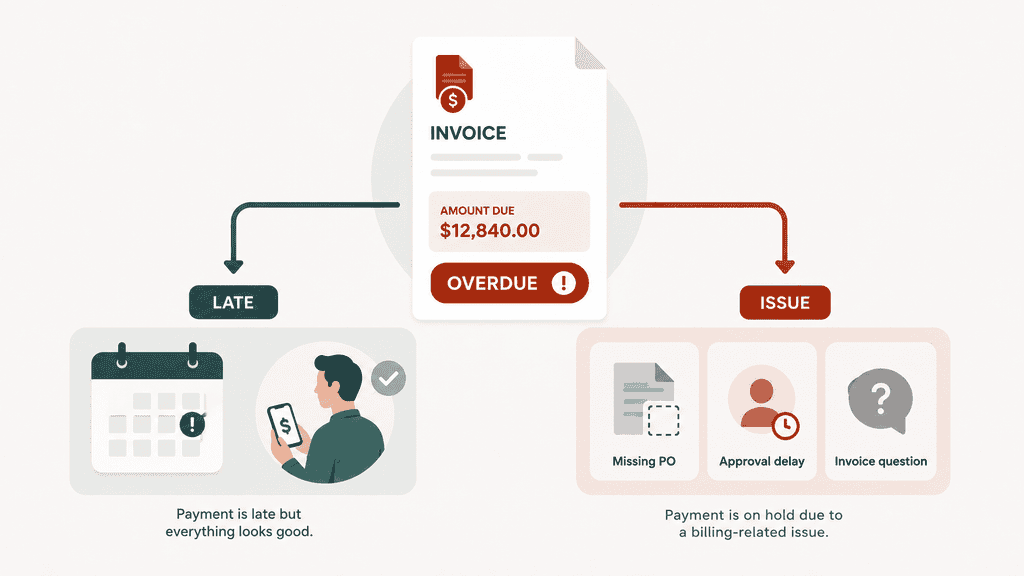
One of the most useful AR exercises is to categorize every significant overdue invoice by root cause.
You may discover that customers are not intentionally paying late. Instead:
- Purchase order numbers are missing.
- Invoices go to the salesperson instead of accounts payable.
- Billing is delayed after work is completed.
- Customers do not understand a line item.
- Payment terms were never agreed upon clearly.
- Customers cannot use their preferred payment method.
- A project manager promised a credit that accounting never recorded.
If the same cause appears repeatedly, the collections team should not simply send reminders more often. Fix the process that creates the delay.
This is also where receivables become part of broader cash flow management. A business can have adequate revenue and still face cash pressure when the timing of collections does not match payroll, rent, supplier payments, taxes, and other obligations.
Accounts receivable management tips that improve collections
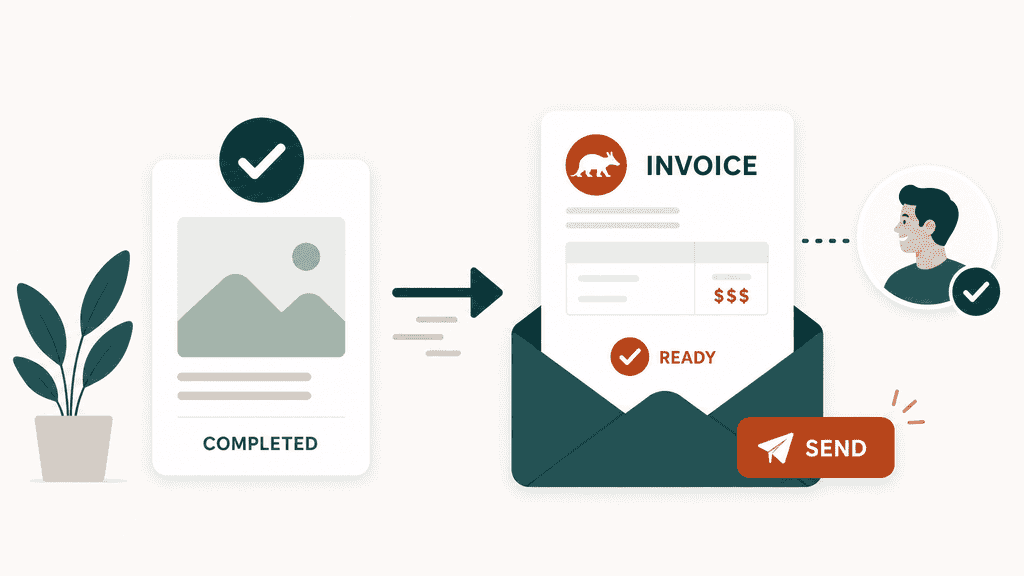
The fastest way to improve AR collections is often to reduce the amount of time between earning revenue and beginning the payment process.
Think of the full cycle:
Work completed → invoice created → invoice delivered → customer approves → payment initiated → payment received → payment reconciled
A delay at any point extends the cash conversion cycle.
1. Send invoices as soon as they become billable
Consider a service company that finishes a project on June 3 but processes all invoices on June 30.
If the customer has net 30 terms, the business has effectively added 27 days to the collection period before the official payment clock even starts.
Whenever your contracts and accounting process allow it, trigger billing from a specific operational event, such as:
- Delivery of a project milestone.
- Approval of a monthly timesheet.
- Shipment of an order.
- Completion of a service visit.
- Start of a subscription period.
- Acceptance of a deliverable.
The objective is simple: minimize unnecessary administrative lag between earning the revenue and requesting payment.
For recurring work, scheduled or recurring invoices can remove another manual step. Accounting platforms such as QuickBooks also allow businesses to configure invoice scheduling and payment options when creating and sending invoices.
2. Make every invoice easy to approve
An invoice can be technically correct and still be difficult for a customer to process.
Before sending it, check whether the customer has everything required to approve payment:
- Correct legal business name and billing address.
- Invoice number and date.
- Clear due date rather than vague wording.
- Purchase order number where required.
- Accurate line items tied to the contract or approved scope.
- Relevant project, department, or contact name.
- Appropriate tax information.
- Clear payment instructions.
For larger customers, ask about their accounts payable process during onboarding. Some companies require vendor registration, specific portals, purchase orders, or manager approval before an invoice can even enter the payment queue.
Discovering those requirements 31 days after an invoice was sent is avoidable.
3. Remove unnecessary payment friction
If paying you requires printing an invoice, entering bank details manually, obtaining information from another employee, and emailing confirmation afterward, you have introduced several opportunities for delay.
Where appropriate, provide payment methods that fit how your customers already operate.
Stripe’s invoicing documentation, for example, describes hosted invoice pages where customers can view invoice information and use enabled payment methods. Its Hosted Invoice Page documentation also explains how payment links can be included in invoice emails.
The right payment options depend on transaction size, fees, customer preferences, fraud controls, and your accounting setup. A business collecting $250 invoices may make different choices from one issuing $75,000 B2B invoices.
Convenience matters, but so do controls. Review payment methods and any associated costs with your accounting and finance team.
4. Confirm receipt before the due date
Do not wait until an invoice is overdue to discover that the customer never received it.
For important invoices, especially large or first-time invoices, confirm that:
- The invoice reached the correct person.
- The customer has everything required for approval.
- There is no dispute about the amount.
- The expected payment date is understood.
This can be a short email or part of the account manager’s normal client communication.
A five-minute confirmation shortly after invoicing can prevent weeks of avoidable delay.
5. Deal with disputes immediately
A disputed invoice should move into a separate workflow.
Continuing to send generic overdue reminders while a customer is questioning the amount rarely solves the problem. Assign someone who can investigate the contract, scope, delivery records, approvals, or pricing.
Set a target date for resolving the dispute and document the outcome.
If only part of an invoice is disputed, determine with your accounting and commercial team whether the undisputed portion can be paid separately. Contract terms and applicable laws may affect what is appropriate, so do not invent a policy during a live dispute.
A practical AR workflow
For many small and midsize businesses, a basic weekly process works better than occasional collection pushes.
- Update the aging report. Reconcile payments and make sure open invoices are accurate.
- Review new overdue invoices. Identify what crossed its due date since the previous review.
- Prioritize material balances. Consider invoice value, age, customer risk, and cash impact.
- Assign an owner. Every overdue invoice should have one person responsible for the next action.
- Record the reason for delay. Do not leave the collection note as simply “overdue.”
- Set the next action date. Every open item should have a defined follow-up.
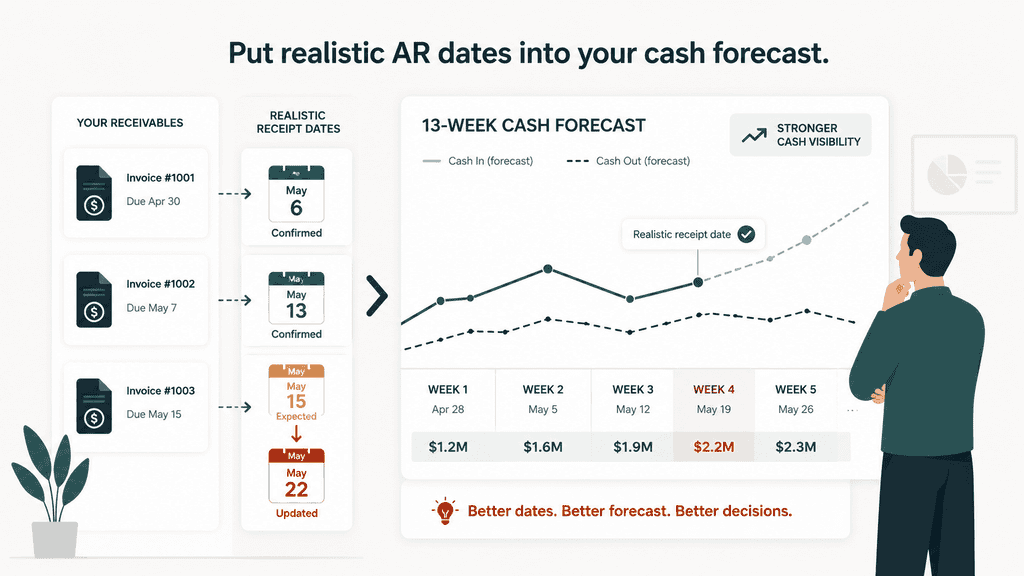
- Feed expected receipts into the cash forecast. Use realistic payment dates rather than automatically assuming customers will pay exactly on terms.
Businesses that cannot easily see how receivables affect the next few weeks of liquidity may also benefit from a structured cash flow forecasting process. That turns AR information into a forward-looking view of the bank balance rather than leaving it as a historical accounting report.
Build a consistent collections workflow
Collections often fail because they depend on memory.
One employee follows up after seven days. Another waits a month. A salesperson does not want to upset a large account. Someone else assumes accounting has handled the invoice already.
A written cadence removes that uncertainty.
Create stages before invoices become overdue
Your actual schedule should reflect your contracts, customers, industry, and risk tolerance, but a service business might create a workflow such as this:
| Timing | Action | Purpose |
| Invoice date | Send invoice with due date and payment instructions | Start payment process clearly |
| Several days before due date | Courtesy reminder for material invoices | Catch approval or processing issues |
| Due date | Confirm payment status where appropriate | Identify delays before aging grows |
| 1 to 7 days overdue | Friendly reminder with invoice attached | Resolve routine late payments |
| 8 to 30 days overdue | Direct follow-up and confirmed payment date | Establish ownership and commitment |
| 31+ days overdue | Escalate internally and review account terms | Manage growing collection risk |
| Materially delinquent | Follow formal company policy and professional advice | Protect the business while handling the account appropriately |
The exact timing is less important than consistency.
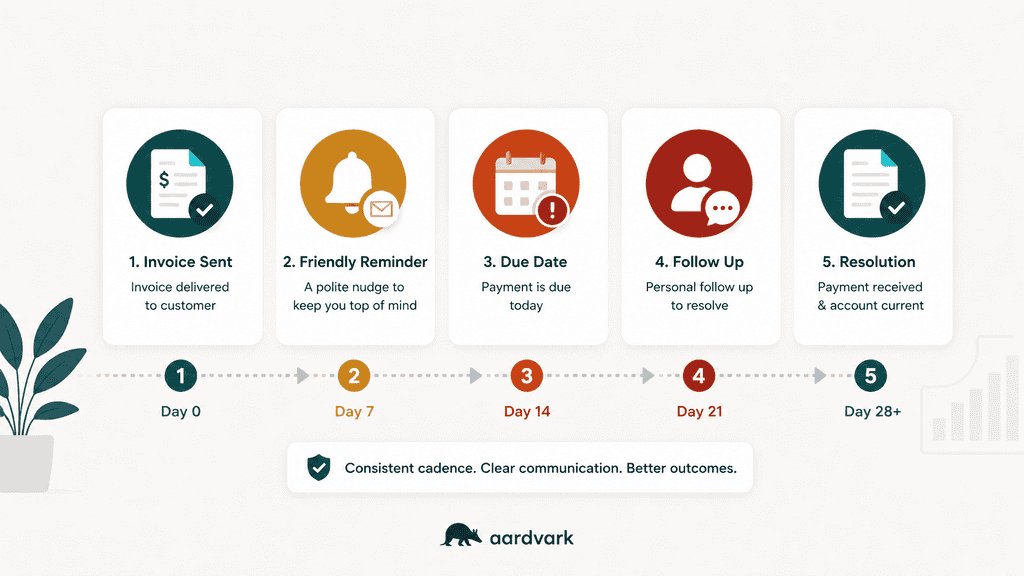
Modern accounting software can handle some routine follow-up. QuickBooks, for instance, lets businesses configure automatic invoice reminders before or after invoice due dates.
Automation should handle predictable reminders, not every customer conversation. Large invoices, disputes, broken promises, and strategically important accounts usually deserve human attention.
Keep collections specific
“Just following up on this invoice” is easy to ignore.
A useful collection message tells the customer exactly what needs to happen. Include:
- Invoice number.
- Original due date.
- Outstanding amount.
- A copy or link to the invoice.
- Any previous payment date the customer committed to.
- A clear question about when payment will be processed.
If the customer says, “It should go out next week,” ask for a specific expected processing or payment date.
That date should then appear in the AR notes and cash forecast.
Separate account management from collection ownership
Sales teams and account managers often have strong customer relationships, but that does not mean they should be solely responsible for collecting money.
A healthier process defines who owns each part:
Sales or account management: clarifies commercial agreements and maintains the relationship.
Billing: creates accurate invoices and sends them promptly.
AR or finance: monitors outstanding balances and runs the collection cadence.
Leadership: handles significant exceptions, credit decisions, and escalations.
When responsibilities remain unclear, overdue invoices tend to bounce between teams.
A company that has a bookkeeper, tax adviser, operations lead, and owner but no one clearly responsible for financial decision-making may have a broader financial team coordination problem, not just an AR problem.
Do not train customers to ignore your terms
Payment behavior can become habitual.
If a customer consistently pays 20 days late and nothing changes, the practical payment term may become “net 50” even though every invoice says net 30.
Repeated lateness should trigger a review. Depending on the relationship, contract, and advice from appropriate professionals, possible responses may include discussing payment expectations, changing future terms, requiring deposits, using milestone billing, adjusting credit limits, or changing whether additional work begins while balances remain outstanding.
The purpose is not to punish a customer. It is to make the economics of the relationship visible.
Measure AR performance and connect it to cash flow
The goal of AR management is not simply to make the aging report look cleaner.
It is to improve the predictability and timing of cash coming into the business.
That requires a small set of useful metrics.
Track more than total accounts receivable
Start with these measures:
Total AR: The full amount customers currently owe.
Past-due AR: The amount that has exceeded contractual payment terms.
Aging mix: The percentage or dollar amount sitting in each aging bucket.
Days sales outstanding (DSO): A common measure of how long receivables take to convert into cash. A basic version is:
Average accounts receivable ÷ credit sales × number of days
The calculation has limitations. Businesses with seasonality, milestone billing, rapid growth, or large customer concentration may need more detailed analysis.
Promise-to-pay accuracy: If customers commit to payment dates, track how often those dates are actually met.
Dispute rate: Monitor the amount or number of invoices delayed by billing disputes.
Collection effectiveness by customer: Identify accounts whose actual payment behavior consistently differs from their stated terms.
NACM’s credit management benchmarking work tracks measures including AR aging and collection activity, which reflects why looking beyond a single outstanding balance can give finance teams a more useful view of receivables performance. See the organization’s accounts receivable metrics resource.
Look at AR in dollars and days
Days are useful because they reveal operational speed. Dollars are useful because they reveal financial impact.
Consider this hypothetical example:
A service business bills roughly $300,000 per month and has $410,000 in open receivables. Its headline AR number looks manageable. A closer review finds $125,000 more than 60 days overdue, including one $70,000 invoice waiting on a purchase order correction.
The best first move is not sending more reminders to every customer. It is resolving the purchase order problem on the $70,000 invoice, confirming expected payment dates for the remaining large balances, and preventing the same billing error on future invoices.
That is the difference between “doing collections” and managing working capital.
Put realistic AR dates into your cash forecast
Suppose an invoice is due Friday, but the customer reliably pays 12 days late.
If your cash forecast assumes the payment will arrive Friday because that is what the invoice says, the forecast is technically neat but operationally weak.
Use the best available information.
For each material invoice, consider:
- Contractual due date.
- Customer’s historic payment behavior.
- Current payment commitment.
- Known disputes.
- Internal approval status.
- Any concentration risk if one customer represents a large share of receipts.
Then update those assumptions as new information arrives.
A rolling forecast makes this process much more useful because you can see whether delayed receipts create a future cash shortfall. A business that wants to map receivables, payables, and other working-capital pressures together can also use a structured cash clarity assessment to identify where money is being held up and which issues deserve attention first.
Know when the problem is bigger than collections
You can improve invoicing and collection procedures and still have weak cash flow.
That happens when the underlying economics do not work.
Warning signs include:
- Customers generally pay on time, but cash is still consistently tight.
- Revenue growth requires large payroll or supplier spending long before customer payment.
- Gross margins are too low to fund operating expenses.
- A few customers represent most outstanding receivables.
- Payment terms offered to customers are much longer than terms received from suppliers.
- The business relies on borrowing every time sales increase.
At that point, AR is one part of the diagnosis.
The finance team may need to examine pricing, gross margin, customer concentration, payment terms, working capital, debt, spending, and the timing between delivering work and collecting cash.
Make collections part of the operating system
The strongest accounts receivable process does not begin with chasing overdue customers. It begins with clear terms, timely billing, accurate invoices, visible aging, defined ownership, and realistic expectations about when cash will arrive.
Treat AR as an operating process instead of a month-end accounting task. When every invoice has an owner, every overdue balance has a reason, and expected receipts feed directly into cash planning, it becomes much easier to improve AR collections, speed up invoice payments, and identify cash problems before they require emergency decisions.
FAQs
What is accounts receivable management?
Accounts receivable management is the process of invoicing customers, tracking unpaid balances, following up on overdue amounts, resolving disputes, recording payments, and managing the risk associated with customer credit. Good AR management also connects expected collections to the company’s cash planning.
How can a business speed up invoice payments?
Start by invoicing immediately, making invoices accurate, confirming the correct billing contact, and giving customers clear payment instructions. Then use pre-due reminders, consistent overdue follow-ups, and convenient payment methods where appropriate.
How often should accounts receivable be reviewed?
For many businesses, a weekly AR review is a practical minimum. Businesses with high transaction volumes, tight cash positions, or large individual invoices may need to review key receivables more frequently.
What is an accounts receivable aging report?
An AR aging report groups unpaid customer invoices according to how long they have been outstanding or overdue. It helps finance teams identify late accounts, prioritize collection work, and see whether receivables are gradually moving into older and potentially more difficult collection categories.
What is a good DSO?
There is no single DSO target that is appropriate for every company. Payment terms, industry practices, billing models, seasonality, customer mix, and growth can all affect the number, so businesses should compare DSO with their own terms, history, and relevant industry benchmarks.
Should businesses automate payment reminders?
Automating routine reminders can reduce administrative work and make follow-up more consistent. Human involvement is still useful for disputes, large balances, missed payment commitments, and customer relationships where the reason for the delay needs to be understood.
When should a business get professional help with accounts receivable?
Professional financial guidance can be useful when receivables are growing faster than sales, overdue balances are materially affecting cash, customer concentration is high, or the company cannot forecast collections with confidence. Legal or accounting professionals may also be needed for bad debts, credit policies, contractual disputes, tax treatment, or formal collection action.